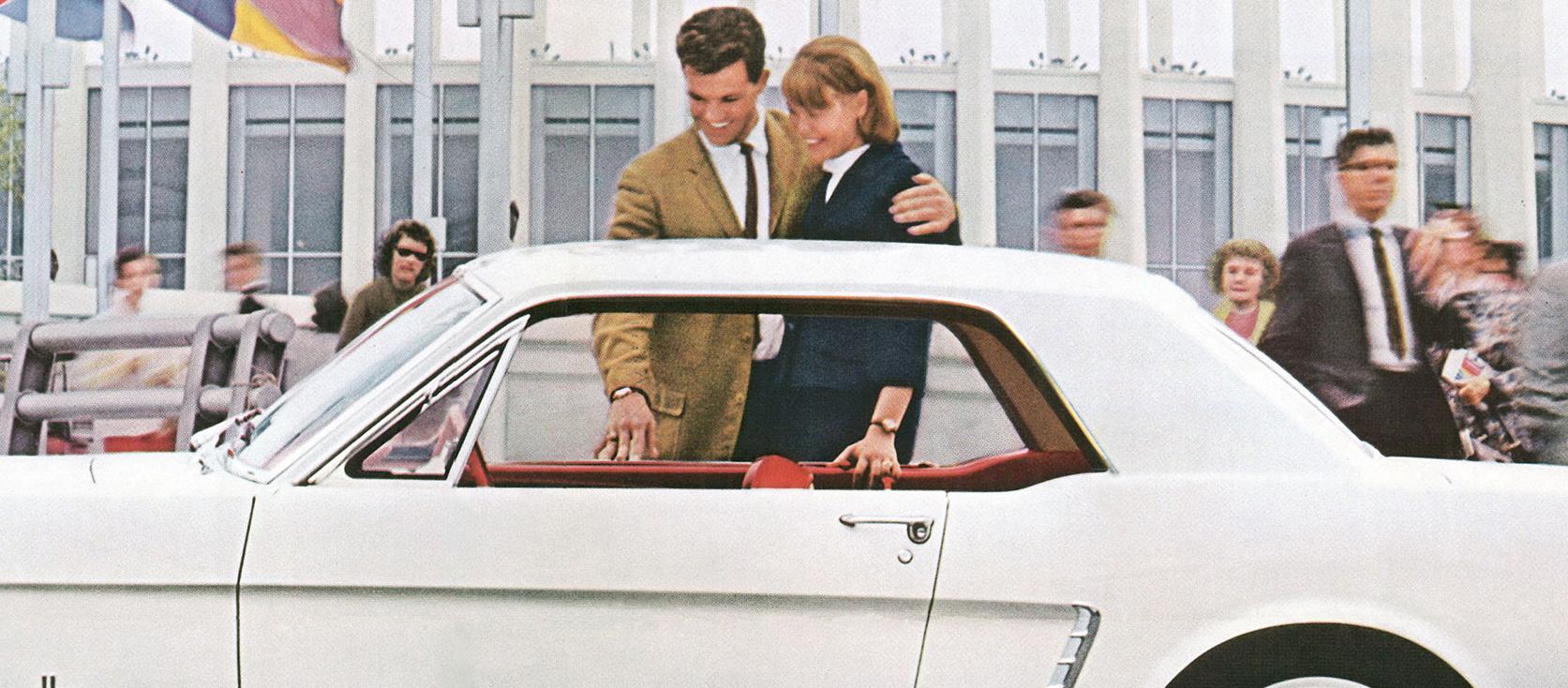
This youthful market would play a bigger role in purchases and had certain wants, including the option for manual and automatic transmission, bucket seats, and a sporty flair to their cars. Research also indicated that design preferences included the sound of a high-performance engine and the feeling of being close to the road. Our internal documents noted “given the ingredients of youth, education, good pay and a desire for style and sportiness in automobiles, we still had to keep in mind that a large segment of the market we were aiming at was made up of young people who were just getting started in life and had good potential and fancy tastes in durable goods – but relatively little ready cash. An early design objective was to keep the car within the range of those buyers.” So, a low entry level price was deemed critical to the success of the car.
The attention to detail as the car was being planned was exhaustive and comprehensive. Given the youth of the potential market, the Research Department conducted a study on the perception of bucket seats as an aid or hindrance to romance among young people. The study was conducted at colleges in eight cities across the country and “42% of the sample size preferred bucket seats for first dates but the number declined to 15% for couples going steady.”
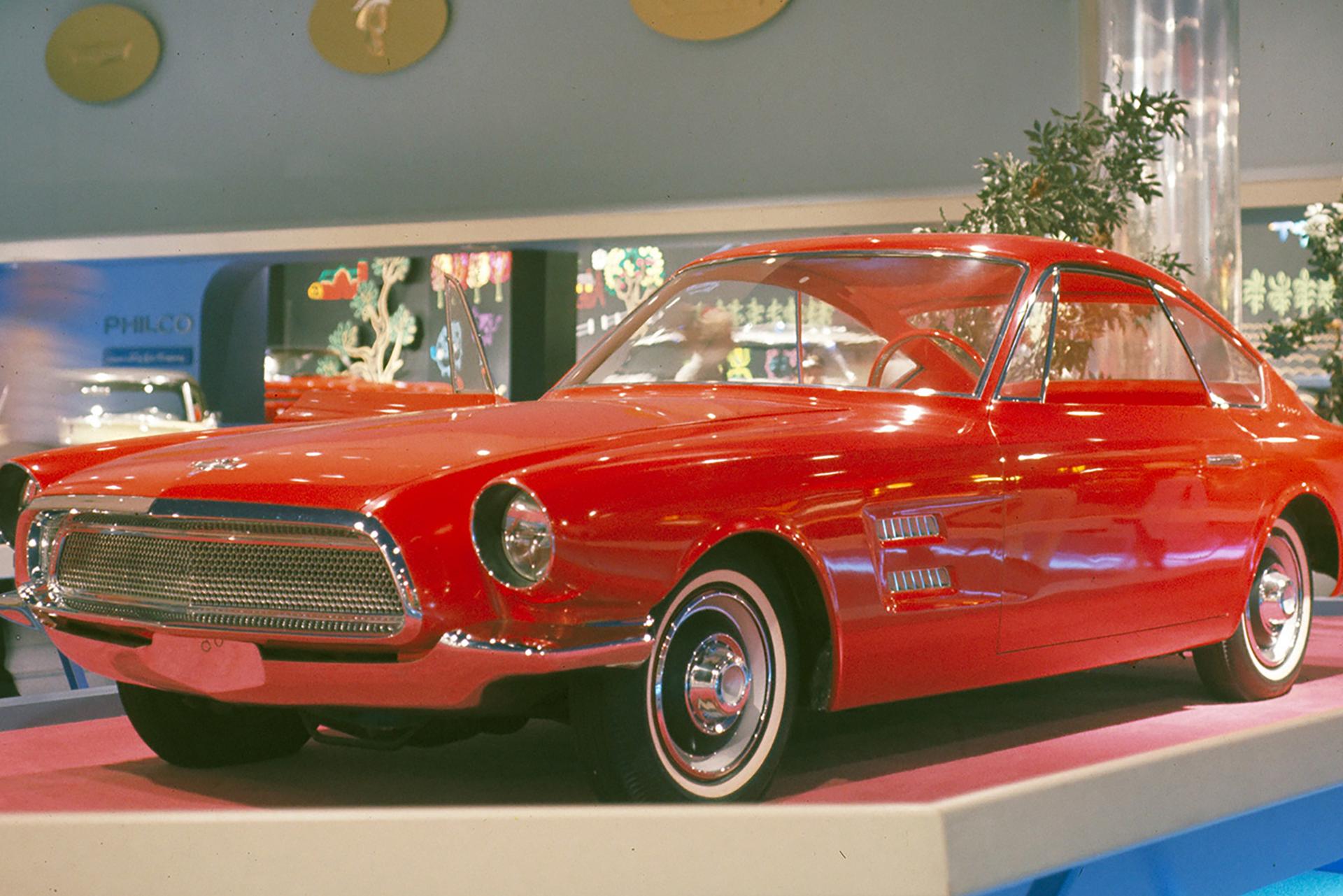
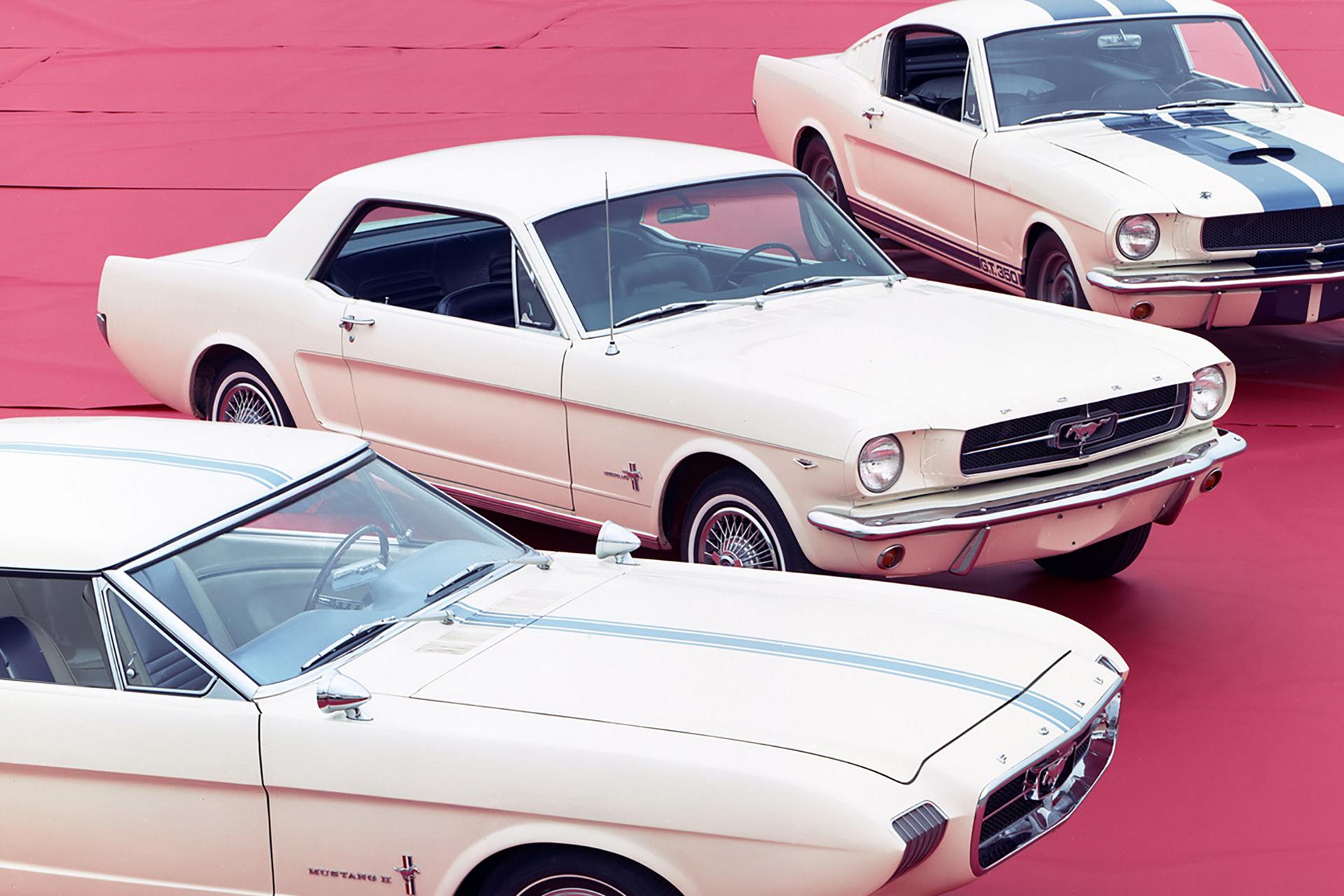
Our designers created three styling cars and we took careful readings on public reaction to their features. We invited selected groups to look at these experimental cars and give us their opinions. The first was the Allegro concept car that was produced along the lines of the increasingly visible European imports. The car featured several innovative design features including a fixed seat, movable brake and accelerator pedals and a swing arm steering column to allow easier ingress and egress to the car. The long hood and grille features were later adopted for the production Mustang.
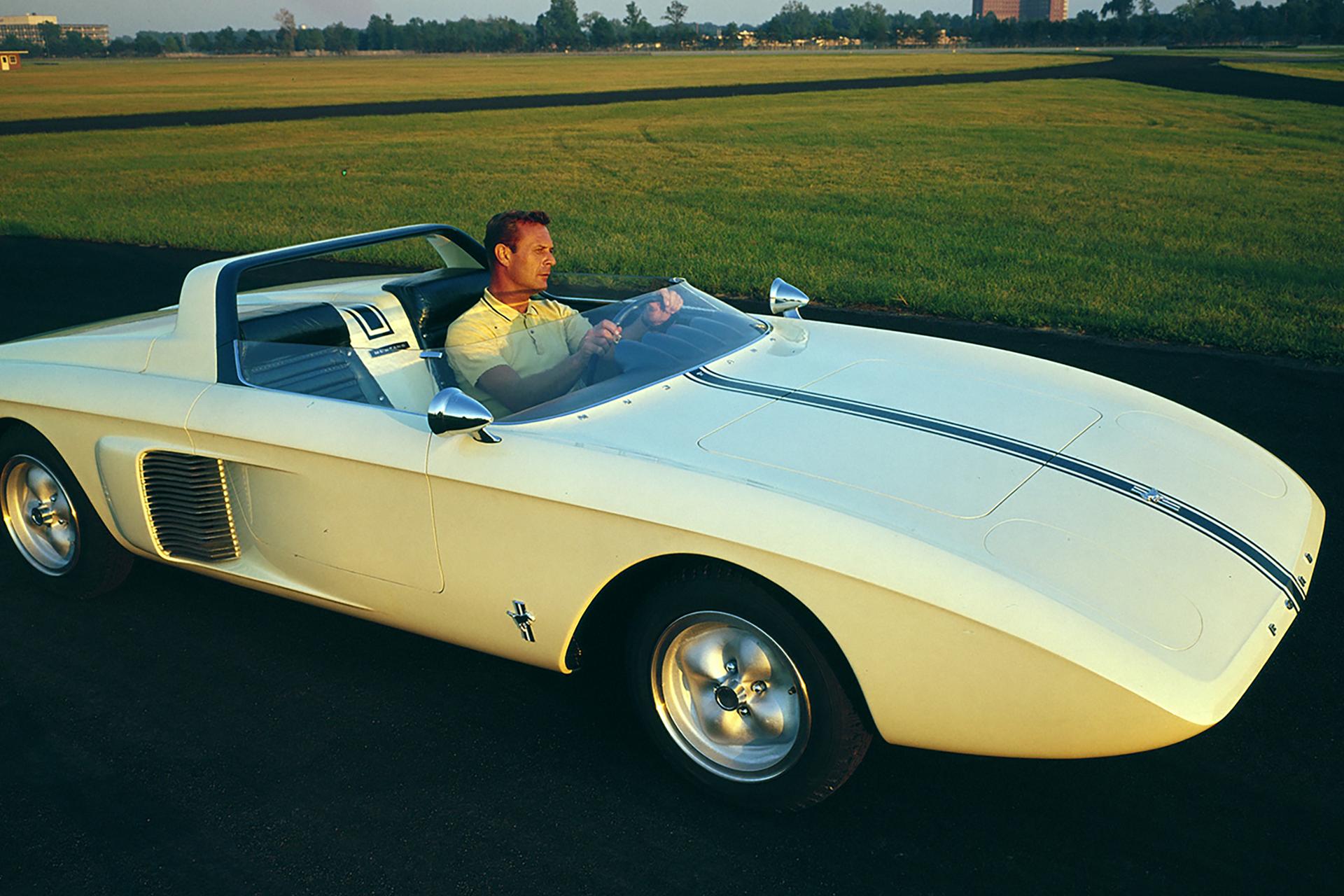
The Mustang I was a two-seater concept car that also borrowed from European styling notes. Two versions of this small, sporty model, with a mid-mounted engine and side flow scoops for cooling, were created. First a fiberglass show car and a second fully functioning vehicle that premiered at Watkins Glen on October, 1962. The Watkins Glen premiere created phenomenal excitement as people poured from the stands to surround the car. Both versions were also used extensively at car shows and were toured around college campuses to gauge interest in the smaller sports cars.
A crash program was undertaken to get an early design solution. Designers of the Corporate Projects Studio, the Ford Studio and the Lincoln-Mercury Studio were given package dimensions and asked to engage in open competition with only two weeks to present clay models of their design ideas. Two weeks later, seven design entries were reviewed and one stood out distinctly. The top management came back again and again to a little white car with red wheels produced by Ford Studio. To validate the choice, select groups of potential buyers were invited to view the seven proposals where, once again, the Ford Studio model was the favorite. A design was set.
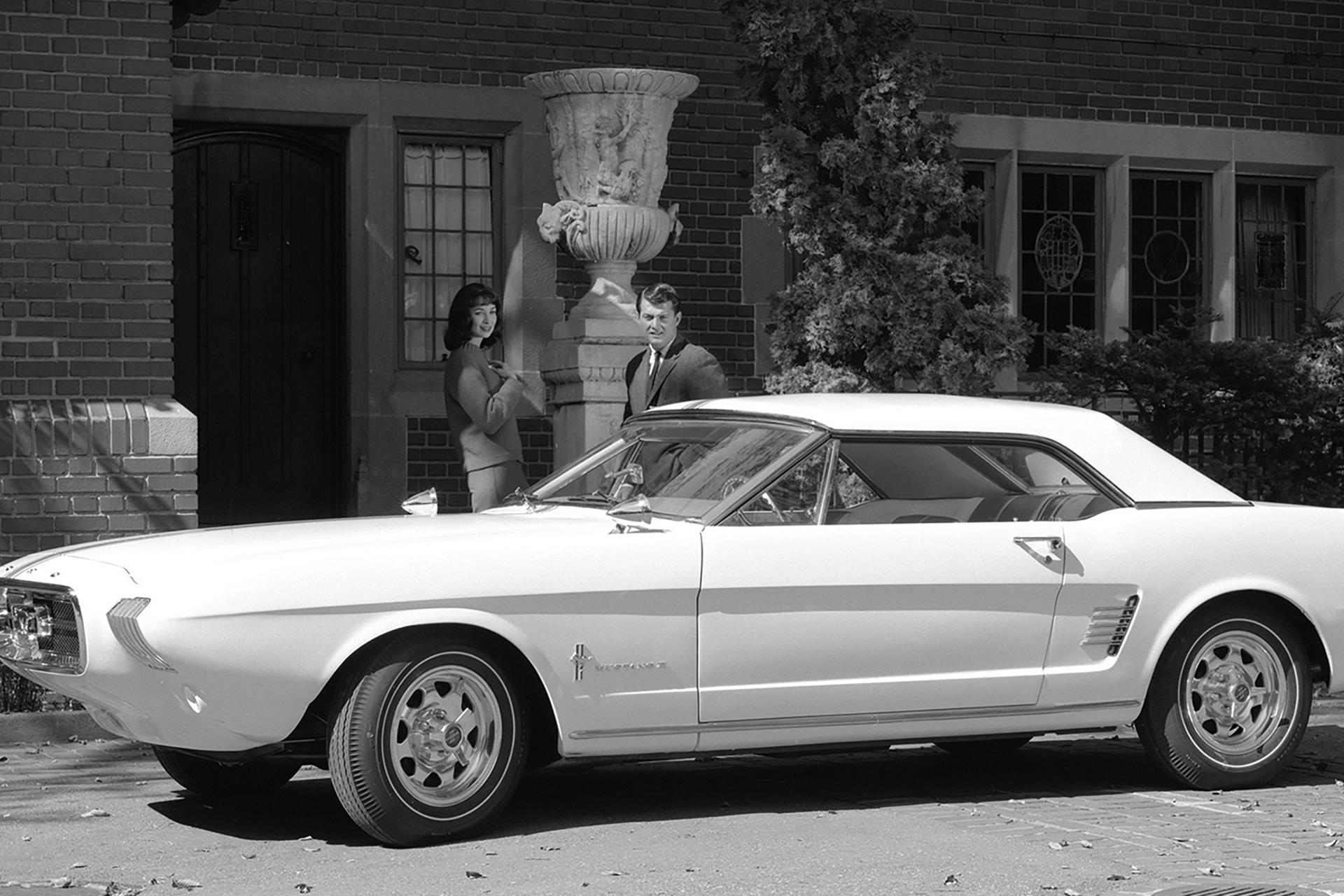
Before the details were finalized, the Mustang II was conceived as a market research tool to validate the design choice. This four-seater sports car incorporated elements of the forthcoming production Mustang. The car’s body, reinforced with fiberglass, was stretched out five inches and the roof lowered by three inches. The concept made its debut at Watkins Glen in October 1963 to whet the appetite for the forthcoming production Mustang. The car was described internally as “Personality: demure enough for church-going, racy enough for the dragstrip, modish enough for the country club.”